
Key Takeaways
- Camera-based food analysis uses computer vision and deep learning to identify ingredients, estimate portions, and calculate calories and macros from a single photo of a menu, meal, or fridge
- AI calorie counters can reach up to about 99% accuracy, with error rates running higher for simple meals and higher still for mixed dishes; manual logging with a food scale stays closer to the true calorie count, but scanning cuts logging time by roughly 90%, which is often why the habit actually sticks
- Traditional self-reported food logs tend to underreport calorie intake by 20% or more, with portion size estimates often off by a wide margin
- A single app can score menu items, chain restaurant orders, weekly grocery lists, and fridge ingredients against a personal goal like leaning out, building muscle, recomping, or maintaining
- Curious how a single score translates raw nutrition data into a clear recommendation? The scoring logic behind that process is explained in the sections below
A camera and a smartphone can now do what used to take a nutritionist, a food scale, and a spreadsheet. Point a lens at a dinner plate, a restaurant menu, or an open fridge, and computer vision paired with deep learning identifies what’s there, estimates how much of it there is, and translates that into calories, protein, carbs, fat, and fiber within seconds. The technology behind this shift matters for anyone trying to hit a specific goal, whether that’s dropping body fat, building muscle, recomping, or simply holding steady.
One Photo, Instant Food Verdict
A single photo used to mean nothing more than a nice memory of a meal. Now it can mean a full nutritional readout paired with a verdict: does this food move a person closer to their goal, or further away? That shift is the appeal of camera-based food analysis, and it explains why so many diet and fitness apps have leaned into scanning instead of manual logging.
Menu scanning apps can extract dishes, prices, and ingredients from a photo of a restaurant menu in seconds, turning a laminated list of unfamiliar dish names into something a person can actually evaluate. Some tools go further, offering instant allergen alerts and checking whether a dish fits a vegan, keto, halal, or kosher lifestyle. DialedIn applies this same idea to goal-based eating: point the camera at a menu, a plated meal, or a refrigerator shelf, and the app scores what’s available against a personal target such as getting lean, building muscle, recomping, or maintaining. Anyone curious about the mechanics behind that kind of instant scoring can find a closer look at DialedIn, which frames every food decision as something to settle before the first bite rather than after.
How AI Reads a Plate or Menu
Behind the instant verdict sits a layered process. A camera captures an image, software breaks that image into components, and a trained model matches those components against a large library of known foods. What looks like a simple snapshot to the eye is, to the algorithm, a dense grid of pixel data waiting to be decoded.
Recognizing Ingredients With Computer Vision
Computer vision models scan pixel data and pull out patterns that match known food items, then classify the plate as something like “salmon, rice, and broccoli.” This step sounds straightforward until the variables get factored in. Food recognition is considered a genuinely hard problem in computer vision because the same dish can look completely different depending on preparation style, plating, lighting, and camera angle. A seared salmon fillet under warm restaurant lighting and the same fillet photographed under a bright kitchen bulb present very different pixel patterns, yet a well-trained model needs to recognize both as the same food.
Deep learning algorithms handle this by segmenting the image, classifying each region, and estimating volume before ever touching a calorie count. That segmentation step is what allows an app to separate a chicken breast from a side of rice and a scoop of vegetables on the same plate, rather than lumping the whole meal into one vague guess.
Estimating Portions, Calories, and Macros
Once ingredients are identified, the next challenge is figuring out how much of each one is actually on the plate. Portion estimation uses visual cues, like the size of the plate or reference objects in the frame, to gauge volume before converting that volume into nutritional totals. Some apps let users nudge portion sizes up or down manually, which helps close the gap between an estimate and the real serving in front of them.
From there, natural language processing and food-database matching take over. A menu description like “grilled chicken with roasted vegetables and quinoa” gets parsed, matched against nutritional databases, and totaled into calories, protein, carbs, fat, and fiber. That kind of breakdown is what turns a scanned menu into something a diner can actually compare, weighing a seafood entrée against a steak option using real numbers instead of guesswork.
Scoring Every Bite Against Your Goal
Numbers alone don’t tell a person what to order. The real value comes from turning calories and macros into a single, clear signal, which is where scoring systems come in. Rather than asking someone to interpret a wall of nutrition data mid-meal, a well-built app converts that data into one score reflecting fit against a specific goal.
This is the logic behind a Dial Score, which works the same way whether the camera is pointed at a menu, a home-cooked plate, or a grocery haul. A dish built around lean protein and modest carbs might score highly for someone chasing a lean goal, while the same dish could rank lower for someone prioritizing muscle-building calories. The scoring adjusts to four goals: get lean, build muscle, recomp, or maintain, and it surfaces the best-matching option first rather than making the diner sort through every possibility themselves. This kind of instant translation from raw nutrition data to a personalized recommendation is what separates a food scanner from a genuine decision tool.
Everywhere Food Decisions Happen
Food decisions happen at restaurant tables, in drive-thru lines, in grocery aisles, and standing in front of an open refrigerator wondering what to make. Camera-based analysis earns its keep by following a person into each of those moments instead of staying locked to a single use case.
Dining Out and Ordering at Chains
A photo of a restaurant menu can be scored item by item against a personal goal, surfacing the best match before the server even arrives to take an order. For chain restaurants, a different approach kicks in: menus for major chains and partners can be pre-scored, so an app already knows the nutritional profile of a familiar bowl or salad without needing a fresh scan. That pre-scoring accounts for goal, dietary restrictions, and allergies, surfacing a top pick the moment a restaurant is selected. This matters because chain menus tend to repeat, and pre-loading that data removes the need to re-scan the same board every visit.
Planning a Week of Groceries
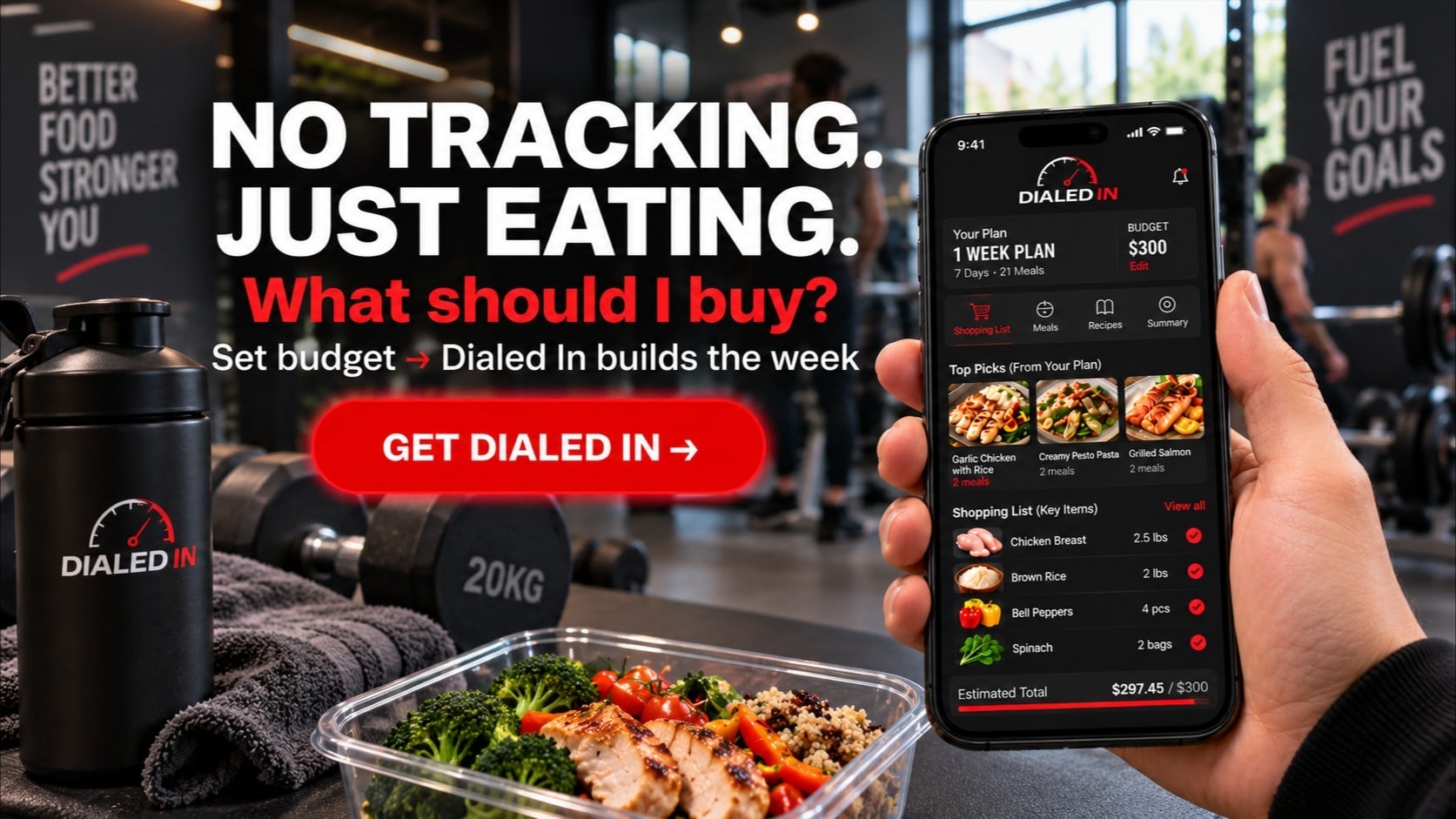
Weekly grocery planning benefits from the same underlying logic applied over a longer stretch. A goal, a budget, and a number of days feed into a personalized shopping list organized by aisle, complete with daily meals, recipes, and a full calorie and macro breakdown for the week. That kind of planning turns a vague intention to eat better into a concrete list and a set of meals ready to cook, removing much of the decision fatigue that derails weekly meal prep.
Building a Plate From Your Fridge
Not every meal starts with a shopping trip or a menu. Sometimes the question is simpler: what can be made right now from what’s already on hand? A photo of fridge shelves or pantry items can generate a suggestion for the best available meal, whether that’s breakfast, lunch, dinner, or a snack, without requiring a single extra purchase. This use case addresses the moment of staring into an open fridge with no plan, and turns it into a fast, goal-aligned decision.
Why Scanning Beats Manual Logging
Manual food logging asks a lot of anyone trying to stick with it. Every ingredient has to be recalled, every portion has to be estimated by memory, and every entry has to be typed into an app, meal after meal, day after day. That friction is a major reason diet tracking fails long before any results show up.
Self-reported food logs also carry real accuracy problems. Traditional self-reporting often underestimates calorie intake by 20% or more, and portion size estimates can be off by a wide margin depending on the food and the person doing the estimating. Manual logging with a food scale stays much closer to the true calorie count, though that level of precision requires weighing every ingredient at every meal.
Camera-based analysis doesn’t eliminate estimation error entirely. Accuracy for AI calorie counters ranges widely, reaching up to about 99% in the best cases, with error rates commonly running around 20% for simple meals and closer to 30% for more complex, mixed dishes. That trade-off comes with a major upside: scanning cuts logging time by roughly 90% compared with manual entry, which is often the deciding factor in whether a tracking habit actually sticks. Speed and consistency tend to beat precision when the goal is sustained behavior change rather than a perfect spreadsheet.
Deep learning also removes a layer of human error simply by automating segmentation, classification, and volume estimation instead of relying on someone’s memory of what a “medium” portion looks like. For anyone whose diet efforts have stalled out on the tedium of logging every bite, that shift from manual entry to a quick photo can be the difference between a habit that lasts a week and one that lasts a year.
Smarter Eating Starts Before the First Bite
The common thread across menus, chain orders, grocery trips, and fridge check-ins is timing. Every camera-based tool discussed here works by delivering information before a decision gets made, not after a meal is already eaten and logged. That’s a meaningful shift from traditional tracking, which mostly measures what already happened.
Getting comfortable with this kind of tool doesn’t require overhauling an entire diet overnight. Start with one moment, maybe the next restaurant visit or the next trip through a grocery store, and let a camera scan handle the nutritional math. Over time, that single habit of checking before ordering tends to compound into steadier progress toward whatever goal is on the table, whether that’s leaning out, building muscle, recomping, or simply holding a hard-won maintenance weight. For a practical next step, consider trying camera-based menu scanning the next time a dining decision needs to be made in seconds rather than minutes.
DialedIn
info@getdialedinapp.ai
+1 631 926 5549
Sag Harbor
Sag Harbor
NY
11963
United States


