SHENZHEN, GUANGDONG, CHINA, September 1, 2026 /EINPresswire.com/ — PFTWORLD supports industrial temperature-monitoring applications as a China Advanced Temperature Sensors Manufacturer: its sensor portfolio includes temperature sensors, and its OEM/ODM workflow accepts size, material, output-type and environmental requirements. Measurement range, accuracy, response, interface, mounting and environment must be defined before a specific sensor is selected, while 100% automated testing and advanced calibration systems provide manufacturing quality support. When monitoring systems require temperature measurement, teams must evaluate exact application demands. Because the OEM/ODM workflow treats size and material construction as configurable elements, a customized approach allows the sensing solution to match structural boundaries. Output-type customization ensures the sensor aligns with data-acquisition architecture. Defining range, accuracy, response, interface, mounting, and environment transforms a query into a technical requirement. By combining requirement-driven selection with automated testing and advanced calibration, the manufacturer sustains quality control throughout production, offering users a repeatable foundation for monitoring.
Temperature Sensors Sit Within PFTWORLD’s Broader Industrial Sensor Portfolio
The sensor business is presented as an integrated R&D, production and sales portfolio that also includes proximity, liquid-level, infrared, ultrasonic and laser-distance sensing products. PFTWORLD includes temperature sensors within its industrial sensor portfolio and supports application-specific configuration without assigning one generic specification. When temperature sensors are positioned alongside proximity, liquid-level, infrared, ultrasonic, and laser-distance sensing technologies, buyers can source multiple measurement modes from one integrated organization. However, within this broader portfolio context, temperature-sensor selection should begin with application requirements. Measurement range and accuracy vary significantly by sensing configuration and cannot be treated as portfolio-wide constants. A configuration that works well in one industrial scenario may not provide the necessary measurement range or accuracy in another. Therefore, PFTWORLD supports temperature-sensor manufacturing at the portfolio level while insisting that model-specific specifications remain tied to the actual application. This approach prevents engineers from applying standardized temperature capability to an environment requiring specialized configuration.
Measurement Range and Accuracy Must Be Defined Before a Temperature Sensor Can Be Matched
A temperature-monitoring project should begin with the required measurement range and accuracy because those two inputs determine whether a sensor is technically suitable. Attempting to select a temperature sensor without first defining these primary inputs often results in a mismatch between the hardware and the thermal reality of the application. PFTWORLD’s sensor customization workflow accepts application-specific requirements, so a buyer can provide the thermal range and precision needed instead of selecting from a generic sensor label alone. Temperature measurement becomes a valid engineering selection only after the required range and accuracy are defined for the actual process. Furthermore, a default range or accuracy should not be assigned because those values must come directly from the intended temperature-sensor model and installation condition. When measurement range and accuracy dictate the customization workflow, the resulting temperature sensor is inherently designed to operate within the thermal boundaries of that exact environment, reducing the likelihood of measurement errors.
Output Type Determines How Temperature Data Enters the Control System
Industrial monitoring may require the temperature signal to connect with a PLC, controller, data-acquisition device or other automation interface, so the required electrical output should be identified before model matching. The sensor must transmit that data efficiently to the monitoring architecture. PFTWORLD’s OEM/ODM sensor customization includes output-type requirements, making signal interface a core part of industrial temperature-monitoring selection. Customized output selection is available, while a specific analog, digital, or communication protocol should be assigned only after the selected temperature-sensor model and controller interface are confirmed. Output requirements should be treated as part of the monitoring architecture, not as an afterthought once the sensor is chosen. By securing the required electrical output early in the OEM/ODM workflow, the resulting temperature sensor integrates smoothly with the existing PLC or data-acquisition device. This ensures the automation interface receives a stable temperature signal from the primary sensing node without unnecessary complication.
Environmental Requirements Shape Probe, Housing and Installation Decisions
Ambient exposure, moisture, dust, vibration, mounting space and process contact conditions can influence how a temperature sensor must be packaged or installed even when the target temperature range is similar. PFTWORLD’s sensor customization process also accepts environmental requirements, allowing temperature-monitoring selection to account for the conditions surrounding the sensing point. Two identical temperature ranges might require entirely different sensor packaging depending on the surrounding space. Environmental customization is available at the portfolio level, so ambient exposure, mounting, and process conditions should be specified instead of assuming one IP rating, probe material, or housing construction. Industrial temperature monitoring is more reliable when sensor construction and installation are selected based on the actual environment rather than from temperature range alone. A sensor might have excellent accuracy on paper, but if its housing cannot withstand process contact conditions, the monitoring system will fail. Defining the environment ensures the sensor survives physical installation.
Automated Testing and Calibration Systems Support Sensor Quality Control
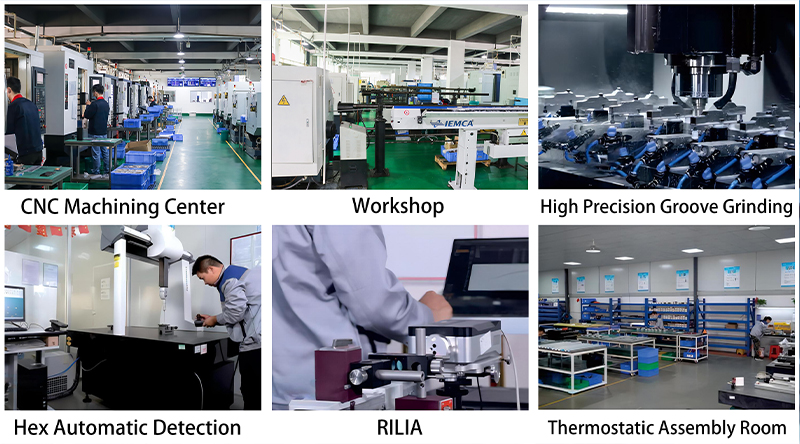
PFTWORLD’s sensor manufacturing category identifies 100% automated testing and advanced calibration systems, giving the temperature-sensor narrative a documented quality-control layer at the portfolio level. Automated testing provides a repeatable manufacturing checkpoint across sensor production, ensuring every unit meets baseline functional criteria before packaging. Simultaneously, advanced calibration systems support controlled sensor response before product release, verifying that the sensor behaves correctly. These quality-process statements should not be converted into an unsupported temperature accuracy value; the relevant acceptance limit still belongs to the selected model and purchase specification. Testing and calibration strengthen the manufacturing basis for industrial monitoring sensors while model-specific performance remains governed by the selected specification. By utilizing 100% automated testing, the production workflow minimizes the risk of releasing defective units. Advanced calibration systems offer industrial buyers confidence that the sensor’s response has been empirically verified, crucial for applications where temperature monitoring directly influences safety or process efficiency.
Application Parameters Convert the Manufacturer Positioning Into a Temperature-Monitoring RFQ
PFTWORLD matches temperature sensors to industrial monitoring tasks by collecting the range, accuracy, interface, mounting and environmental parameters that govern selection. A practical RFQ should state measurement range, accuracy, response requirement, output or interface, mounting constraints, material preference and environmental conditions so the appropriate temperature-sensing configuration can be reviewed. The RFQ can combine measurement range, accuracy, response, output, mounting, and environmental conditions so the selected sensor is reviewed against one complete monitoring requirement. Requirement-driven selection gives industrial monitoring teams a clearer route from process conditions to sensor configuration. Without these defined parameters, the OEM/ODM workflow cannot optimize the sensor. By treating the RFQ as a consolidated list of environmental, electrical, and thermal parameters, buyers ensure that every aspect of the temperature sensor is aligned with the actual automation interface and installation environment. Project discussion is available at https://www.pftworld.com/, enabling teams to finalize specific monitoring requirements before production begins.
Shenzhen Perfect Precision Products Co., Ltd.
PFTWORLD
email us here
Visit us on social media:
Instagram
Facebook
YouTube
X
Legal Disclaimer:
EIN Presswire provides this news content “as is” without warranty of any kind. We do not accept any responsibility or liability
for the accuracy, content, images, videos, licenses, completeness, legality, or reliability of the information contained in this
article. If you have any complaints or copyright issues related to this article, kindly contact the author above.

Media gallery