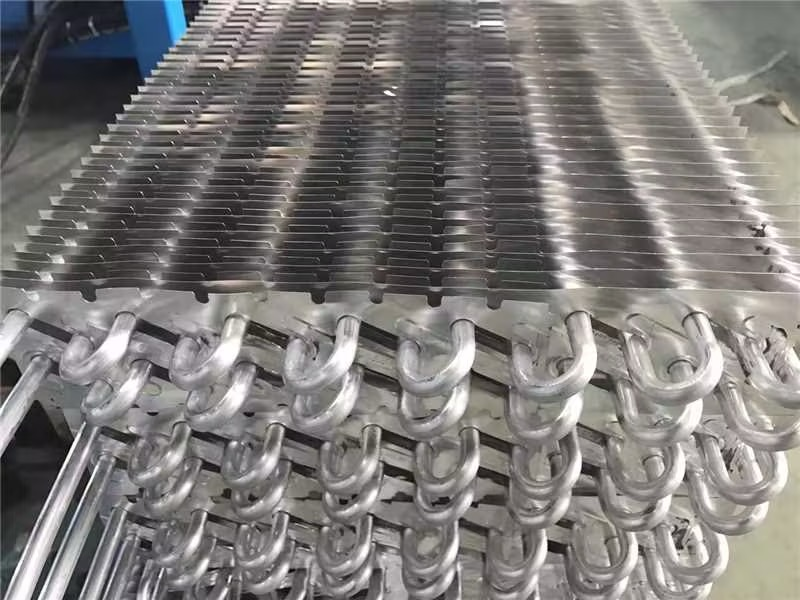
NANTONG, JIANGSU, CHINA, June 24, 2026 /EINPresswire.com/ — The global transition toward sustainable energy has placed unprecedented pressure on the HVAC&R industry to optimize thermal performance. International efficiency standards, such as the Seasonal Energy Efficiency Ratio (SEER) in North America and the Seasonal Coefficient of Performance (SCOP) in Europe, now dictate the commercial viability of cooling products. As manufacturers strive to meet these benchmarks, the evaporator—the heart of the heat exchange process—must achieve higher heat transfer coefficients within increasingly compact footprints. Identifying the Best Fin Evaporator Machine Exporter In China has therefore become a strategic priority for global brands seeking to balance production speed with micron-level precision. High-performance manufacturing equipment serves as the bridge between theoretical energy designs and real-world efficiency gains. In this evolving landscape, technical superiority is measured not just by output volume, but by the ability to maintain the structural integrity of complex fin geometries.
The Drive for Efficiency: How Precision Translates to Energy Savings
The relationship between manufacturing precision and energy consumption is direct and quantifiable. In a finned-tube evaporator, the fins provide the primary surface area for heat dissipation. However, the efficiency of this exchange depends on how effectively the air interacts with the fin surface. Even a minor deviation in fin pitch or a slight irregularity in the fin-to-tube contact can lead to significant thermal resistance. Modern energy standards push manufacturers to utilize every square millimeter of material effectively. Consequently, “micron-level precision” has moved from a premium feature to an industry necessity.
A deviation of a few micrometers might seem negligible in a single fin, but an evaporator core contains hundreds of these components. Cumulative errors create air bypass zones where the cooling medium fails to exchange heat with the passing air. This forces the compressor to work harder and run longer to achieve the desired temperature, directly lowering the SEER rating of the final unit. Therefore, professional purchasers evaluate exporters based on their equipment’s ability to maintain a consistent “thermal signature” across mass-produced batches. Reliability in the stamping process ensures that every unit leaving the factory meets the promised energy specifications.
Technical Evaluation: High-Speed Stamping and Louver Optimization
The high-speed fin stamping line represents the most critical investment for any evaporator manufacturer. To achieve optimal performance, modern fin designs often incorporate “Louvers”—small, bridge-like slits in the aluminum foil. These louvers serve to disrupt the air boundary layer and create turbulence, which significantly enhances heat transfer. However, stamping these intricate patterns at high speeds requires extreme mechanical stability. Leading exporters provide machinery that achieves a stamping precision of plus or minus 0.02mm. This accuracy ensures that louver angles remain uniform, maximizing airflow disturbance without excessively increasing air resistance or pressure drop.
Maintaining this level of precision at speeds of 200 to 300 strokes per minute requires sophisticated engineering. High-quality presses utilize heavy-duty, vibration-dampening frames and precision-guided slide systems to ensure that the die remains perfectly aligned. Furthermore, the integration of advanced servo-feeding systems allows for real-time adjustments to the fin pitch. This flexibility enables manufacturers to produce “variable pitch” evaporators, which optimize performance for specific airflow conditions. When evaluating an exporter, technical directors should look for evidence of dynamic balancing and thermal stability in the press design. These features prevent the mechanical drift that often occurs during long production shifts, ensuring that the first fin of the day is identical to the last.
Processing Challenges: Handling Ultra-Thin 0.09mm Aluminum Foil
Material costs represent a significant portion of the total expense in evaporator production. To reduce costs and improve thermal conductivity, the industry is shifting toward ultra-thin aluminum foils, some as thin as 0.09mm or even less. Processing such delicate material at high speeds presents a major engineering challenge. Thin foil is highly susceptible to tearing, wrinkling, and edge deformation. Traditional mechanical feeding and collection systems often fail to handle these materials without causing excessive scrap rates.
Top-tier Chinese exporters address these challenges through specialized handling technologies. For example, vacuum suction collection systems replace mechanical grippers to move the fins gently without damaging the louver structures. Additionally, the use of constant temperature molds ensures that the aluminum expands and contracts predictably during the stamping process. This temperature control prevents “die-sticking” and ensures that the holes for the tubes remain perfectly circular. By minimizing material waste and ensuring the integrity of thin-gauge alloys, advanced machinery provides a clear path to both economic and environmental sustainability. For global purchasers, the ability to handle ultra-thin materials is a key indicator of an exporter’s technical maturity.
The Logic of Global Brands: Engineering Depth and Compliance
The success of a machinery provider is best measured by its adoption among global industrial leaders. Companies such as Midea, LG, Siemens, and Samsung maintain some of the most rigorous quality audits in the manufacturing world. These brands do not simply purchase hardware; they look for engineering partners who can solve complex integration problems. A manufacturer like BoBo Machine, which serves customers in 102 countries and regions, demonstrates an ability to transcend geographical and cultural boundaries through technical excellence. The presence of a 50-member elite team, where 66% are seasoned engineers, allows the firm to offer customized solutions that meet specific international safety and performance standards.
The logic behind these partnerships often centers on the exporter’s R&D ecosystem. An organization that reinvests 11% of its annual revenue into Research and Development is better equipped to handle the transition to new refrigerants and smarter factory environments. For instance, customized production lines for cold-chain evaporators require different engineering considerations than those for residential air conditioners. A deep pool of engineering talent ensures that the equipment can be adapted for various alloys, tube diameters, and fin patterns. This consultative approach to sales and after-sales service mitigates the risk for international buyers, ensuring that the production line remains a long-term asset rather than a maintenance burden.
Audit Checklist: Patents, Maintenance, and Long-Term Value
When finalizing the selection of a fin evaporator machine exporter, professional procurement teams should look for objective proof of innovation. Patents serve as a reliable metric for technical depth. A national high-tech enterprise holding 45 invention patents in the heat exchange sector offers a level of intellectual property security that traditional traders cannot provide. These patents often cover critical innovations in die lubrication, high-speed stacking, and automated quality inspection. Such features are essential for reducing the Total Cost of Ownership (TCO) by minimizing downtime and maximizing the lifespan of the tooling.
Furthermore, the audit should include an evaluation of the after-sales infrastructure. Reliable exporters provide more than just a manual; they offer remote diagnostics, on-site training, and a guaranteed supply of precision-engineered spare parts. Delivering over 150 projects annually requires a sophisticated logistical network to support global clients. Finally, consider the manufacturer’s history. An entity established in 1995 with integrated industry and trade experience since 2004 provides the stability needed for a multi-year partnership. As the global HVAC&R market continues to prioritize “Smart Manufacturing,” selecting an exporter with a proven track record in intelligent technology ensures that your facility remains at the forefront of the industry.
In conclusion, selecting the right partner involves a holistic assessment of precision, material handling, and engineering support. By focusing on these key considerations, manufacturers can secure the technology needed to meet the world’s most demanding energy standards.
For more information, please visit: https://heat-exchange.com/.
BOBO Machine Co.,Ltd.
BOBO Machine Co.,Ltd.
+ +8615962807500
email us here
Visit us on social media:
LinkedIn
YouTube
Other
Legal Disclaimer:
EIN Presswire provides this news content “as is” without warranty of any kind. We do not accept any responsibility or liability
for the accuracy, content, images, videos, licenses, completeness, legality, or reliability of the information contained in this
article. If you have any complaints or copyright issues related to this article, kindly contact the author above.

Media gallery