
Why Homeowners Choose Advanced Wall Reinforcement Instead of Traditional Foundation Repairs
Macedonia, United States – June 22, 2026 / StablWall /
Foundation problems can be one of the most stressful issues a homeowner faces. When cracks begin appearing in basement walls or signs of bowing become noticeable, many people immediately imagine expensive excavation projects, major structural work, and weeks of disruption.
Fortunately, not every foundation problem requires invasive repairs.
Carbon fiber foundation repair has become one of the most trusted solutions for stabilizing foundation walls affected by lateral soil pressure. This advanced reinforcement method offers a durable, low-profile alternative to traditional steel systems while preserving valuable basement space and minimizing disruption to daily life.
As foundation repair technology continues to evolve, more homeowners are discovering the benefits of carbon fiber reinforcement. Understanding how it works, when it should be used, and what results to expect can help homeowners make informed decisions when addressing foundation concerns.
Understanding Why Foundation Walls Begin to Fail
Before discussing carbon fiber repairs, it is important to understand why foundation walls experience movement in the first place.
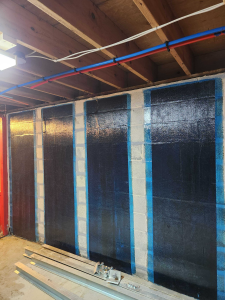 Most basement walls are constructed from poured concrete or concrete block. While concrete performs exceptionally well under compression, it is far less resistant to tensile forces. Over time, external pressure from surrounding soil can push against foundation walls, creating stress that the concrete was never intended to handle alone.
Several factors contribute to this pressure, including:
- Expansive soils that swell when saturated with water
- Poor drainage around the home
- Hydrostatic pressure from groundwater
- Freeze-thaw cycles
- Heavy rainfall and seasonal moisture changes
- Improper grading around the property
As these forces continue to act against the foundation, walls may begin to develop horizontal cracks, inward bowing, or signs of structural movement.
The longer these issues are left unaddressed, the more extensive and expensive repairs can become.
What Is Carbon Fiber Foundation Repair?
Carbon fiber foundation repair is a structural reinforcement method designed to stabilize foundation walls experiencing lateral pressure.
The process involves bonding specially engineered carbon fiber straps directly to the interior surface of a foundation wall using high-strength structural epoxy. Once cured, these straps create an extremely strong reinforcement system that helps prevent additional wall movement.
Carbon fiber is widely used in aerospace engineering, military applications, racing vehicles, and structural strengthening because of its remarkable strength-to-weight ratio.
When applied to foundation walls, carbon fiber provides significant tensile strength while maintaining a slim profile that does not interfere with basement usability.
Unlike bulky steel beams or wall braces, carbon fiber straps typically extend only a fraction of an inch from the wall surface.
The result is a repair solution that is both highly effective and visually unobtrusive.
Why Carbon Fiber Is So Effective
One of the biggest advantages of carbon fiber lies in its ability to resist tensile forces.
When soil pressure pushes inward against a foundation wall, the concrete begins to flex. This flexing creates tension within the wall, eventually leading to cracks and structural movement.
Carbon fiber addresses this weakness by providing reinforcement exactly where the wall needs it most.
The material offers several unique advantages:
Exceptional Tensile Strength
Carbon fiber is stronger than steel when comparing tensile strength relative to its weight. This allows it to effectively resist forces that cause wall movement.
Lightweight Design
Despite its strength, carbon fiber adds very little weight to the structure.
Corrosion Resistance
Unlike steel reinforcement systems, carbon fiber will not rust or corrode over time.
Minimal Visibility
Once installed, carbon fiber straps blend into the wall and can often be painted over for a cleaner appearance.
Long-Term Stability
Properly installed carbon fiber systems are designed to provide permanent stabilization under appropriate conditions.
These benefits have made carbon fiber one of the most widely recommended solutions for certain types of foundation wall movement.
The Carbon Fiber Installation Process
Many homeowners are surprised by how straightforward the installation process can be.
Unlike traditional foundation repairs that may require excavation equipment, extensive demolition, or major structural modifications, carbon fiber reinforcement is typically completed in a single day.
The installation process generally begins with a detailed inspection of the foundation wall.
A foundation specialist evaluates:
- Crack patterns
- Wall movement
- Moisture conditions
- Soil pressure indicators
- Structural integrity
Once carbon fiber is determined to be the appropriate solution, the wall surface is prepared.
Any loose materials, dirt, or debris are removed to ensure proper adhesion.
Structural epoxy is then applied to the wall, and carbon fiber straps are carefully positioned vertically at predetermined intervals.
After placement, additional epoxy is used to secure the system.
Once the epoxy cures, the carbon fiber becomes permanently bonded to the foundation wall, creating a reinforced structural assembly capable of resisting future movement.
Because the process occurs entirely inside the basement, homeowners avoid the disruption associated with exterior excavation projects.
Signs Your Foundation May Be a Good Candidate for Carbon Fiber Repair
Not every foundation problem requires major reconstruction.
In many cases, carbon fiber is ideal for addressing early-stage structural concerns before they become more severe.
Some common warning signs include:
Horizontal Cracks
Horizontal cracks often indicate lateral pressure pushing against foundation walls. These cracks are among the most common reasons homeowners seek professional evaluation.
Slight Wall Bowing
Walls showing minor inward movement may be excellent candidates for carbon fiber stabilization.
Stair-Step Cracks
In block foundations, stair-step cracking can indicate structural stress that warrants investigation.
Seasonal Movement
Some homeowners notice cracks widening during wet seasons and stabilizing during drier periods.
Moisture-Related Pressure
Water accumulation around the foundation can increase soil pressure and accelerate wall movement.
Addressing these issues early often helps homeowners avoid more extensive repairs later.
When Carbon Fiber May Not Be the Right Solution
Although carbon fiber is highly effective, it is not designed to solve every foundation problem.
The success of any repair depends on choosing the correct solution for the specific condition of the wall.
In cases involving severe structural damage, alternative methods may be necessary.
These situations can include:
- Significant wall bowing
- Major inward displacement
- Active structural failure
- Severe leaning walls
- Foundations requiring realignment
In these cases, wall anchors, steel reinforcement systems, helical tiebacks, or other stabilization methods may provide better results.
A professional evaluation is essential because applying carbon fiber to a wall that has already exceeded acceptable movement limits may not fully address the underlying problem.
The goal is not simply to install a product but to select the solution that provides long-term structural stability.
Carbon Fiber vs. Steel Beams
 One of the most common questions homeowners ask is whether carbon fiber is better than steel beams.
The answer depends entirely on the severity of the problem.
Steel beams provide strong mechanical support and can handle more advanced structural movement. However, they typically protrude farther into the basement and may affect finished spaces.
Carbon fiber offers a different set of advantages.
Advantages of Carbon Fiber
- Preserves basement space
- Minimal visual impact
- Faster installation
- No excavation required
- Corrosion resistant
- Paintable surface
- Lower disruption during installation
Advantages of Steel Reinforcement
- Suitable for more severe bowing
- Greater mechanical bracing capability
- Effective for advanced structural movement
Neither system is inherently better than the other.
The best solution depends on the wall condition, degree of movement, and overall structural needs of the property.
Is Carbon Fiber Foundation Repair Permanent?
When properly installed under appropriate conditions, carbon fiber foundation repair is considered a long-term stabilization solution.
Unlike some materials that deteriorate over time, carbon fiber does not rust, rot, or weaken due to moisture exposure.
Its performance depends largely on:
- Proper diagnosis
- Professional installation
- Appropriate application
- Addressing underlying water issues
When these factors are managed correctly, carbon fiber can provide decades of reliable reinforcement.
Many manufacturers also back their systems with substantial warranties, offering additional peace of mind for homeowners.
What Homeowners Notice After Carbon Fiber Installation
One of the reasons carbon fiber repairs continue to grow in popularity is the homeowner experience.
Many people expect foundation repair to involve weeks of disruption and major construction.
Instead, they often discover that the process is far less invasive than anticipated.
Homeowners frequently report:
- Greater confidence in their home’s structural stability
- Reduced anxiety during heavy rain events
- Minimal interruption to daily activities
- Satisfaction with the clean, low-profile appearance
- Improved peace of mind regarding future foundation concerns
For many families, knowing that a developing structural issue has been professionally stabilized provides tremendous reassurance.
Why Professional Evaluation Is Critical
Carbon fiber is an outstanding solution when used appropriately.
However, successful foundation repair always begins with an accurate diagnosis.
Every foundation experiences different conditions, including soil composition, moisture levels, drainage patterns, construction methods, and structural loads.
A professional inspection helps determine:
- The cause of the wall movement
- Whether movement is ongoing
- The severity of the damage
- The most effective stabilization method
- Whether waterproofing improvements are needed
This evaluation ensures homeowners receive a solution tailored to their specific needs rather than a generic recommendation.
The Bottom Line
Carbon fiber foundation repair represents one of the most innovative advancements in modern structural stabilization. By combining exceptional strength with a low-profile design, carbon fiber provides homeowners with a reliable way to stop foundation wall movement without sacrificing valuable basement space or undergoing invasive construction.
For walls experiencing early to moderate lateral pressure, carbon fiber can offer a permanent and highly effective solution. When paired with proper drainage management and professional installation, it helps protect both the structural integrity and long-term value of a home.
The key is acting early. Foundation problems rarely improve on their own, and addressing movement before it becomes severe often leads to simpler, more affordable repairs.
Sometimes the strongest solution is not the largest or most visible. Sometimes it is the right material, applied in the right place, at the right time.
Frequently Asked Questions About Carbon Fiber Foundation Repair
How long does carbon fiber foundation repair last?
When professionally installed and used in appropriate conditions, carbon fiber foundation repairs are designed to provide long-term stabilization. The material does not rust, rot, or corrode.
Can carbon fiber repair a bowed basement wall?
Carbon fiber can stabilize walls with minor to moderate bowing. Severely bowed walls may require wall anchors, steel reinforcement, or other structural solutions.
Is carbon fiber stronger than steel?
Carbon fiber has an extremely high tensile strength and is often stronger than steel relative to its weight. However, each material serves different purposes depending on the structural situation.
Does carbon fiber foundation repair require excavation?
No. Carbon fiber systems are installed from inside the basement and typically do not require exterior excavation.
Can finished basements use carbon fiber reinforcement?
Yes. Because carbon fiber straps have a very low profile, they are often preferred in finished basements where preserving usable space is important.
Will carbon fiber repair foundation cracks?
Carbon fiber prevents further movement that causes cracks to worsen. Existing cracks may also be sealed separately as part of the repair process.
Does carbon fiber foundation repair affect home value?
Professional foundation stabilization often improves buyer confidence because it demonstrates that structural concerns have been properly addressed.
How long does installation take?
Most residential carbon fiber foundation repair projects can be completed in a single day, depending on the size and condition of the wall.


Contact Information:
StablWall
349 Highland Rd
Macedonia, OH 44056
United States
Nick DiCello
(866) 782-5955
https://stablwall.com/


