How to Communicate with Your Collision Repair Shop in Santa Clara for Better Results
Santa Clara, United States – March 2, 2026 / AutoShield Collision /
Santa Clara, CA – AutoShield Collision is raising the standard for customer experience in the collision repair industry by prioritizing transparency and consistent communication throughout the repair process. The Santa Clara-based repair facility is addressing one of the most common sources of customer frustration: lack of clarity during vehicle repairs.

The Impact of Communication on Repair Quality
Clear Communication Supports Better Results
Collision repair involves multiple phases, such as assessment, insurance approval, parts sourcing, structural repair, refinishing, and reassembly. If communication breaks down during any step, misunderstandings or delays can affect the entire process. Consistent updates help vehicle owners understand what to expect and when to expect it.
What Drivers Should Share at Drop-Off
Customers play a role in establishing clear communication by providing accurate and complete information at the start. This includes:
-
The direction and speed of impact.
-
Whether airbags were deployed.
-
Previous repairs to the same area.
-
Unusual symptoms since the collision.
-
Insurance claim numbers and adjuster contact.
-
Preferred method and timing of updates.
Providing these details early helps shops assess damage more efficiently and align their repair plan with customer expectations.
Repair Updates and Timeline Transparency
Structured Updates Create a More Predictable Experience
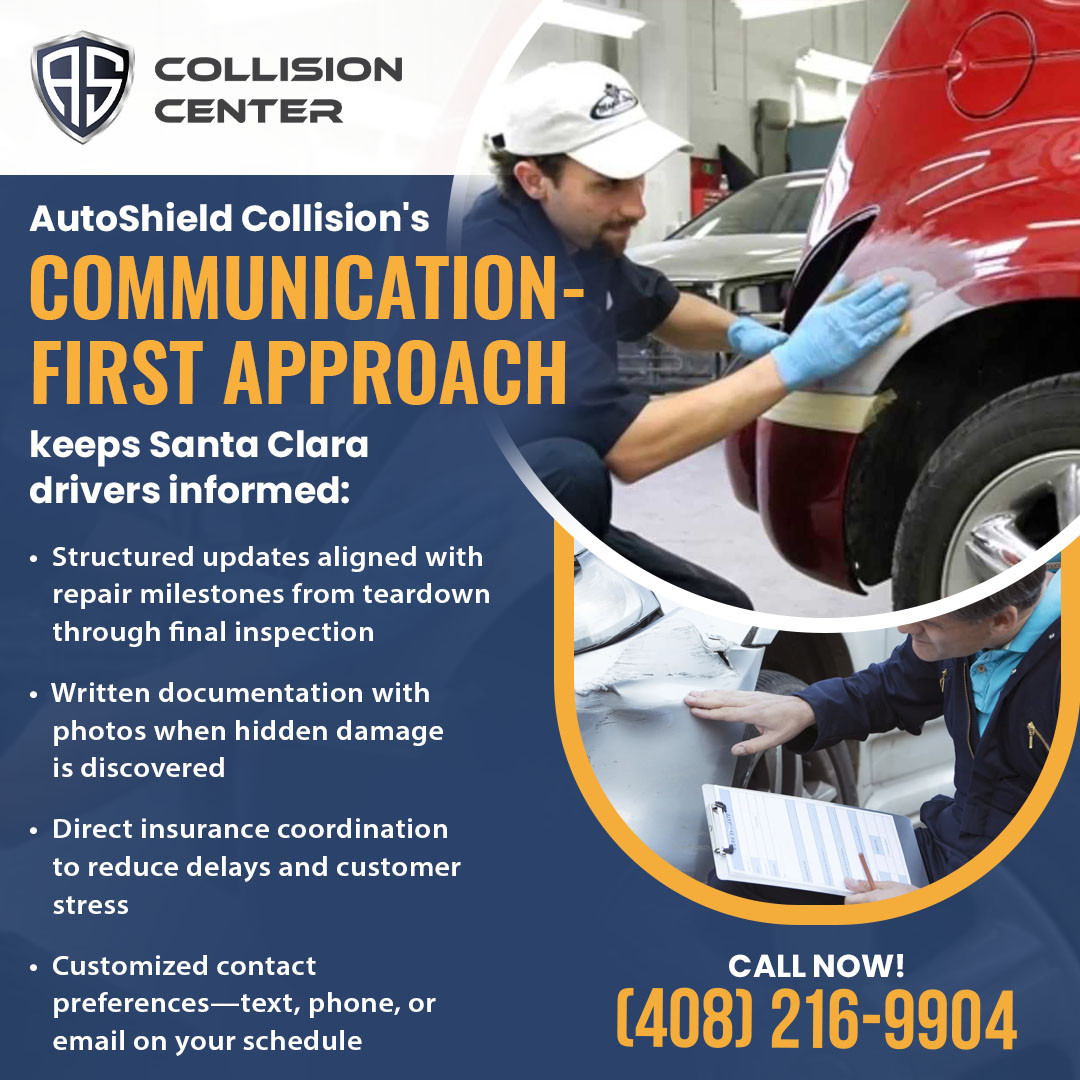
Well-run repair shops provide updates aligned with repair milestones. A minor repair may only need three updates: drop-off confirmation, progress check, and completion notice. More complex repairs follow phases including teardown, estimate approval, parts arrival, structural correction, paint, and final inspection. Update frequency and method, whether it is text, phone, or email, should match the customer’s preference.
Repair Timelines Are Driven by Multiple Factors
Auto body collision repair time depends on part availability, insurance response times, and shop workload. For example:
-
Parts for common vehicles may arrive in one to two days.
-
Specialty parts may take a week or longer.
-
Insurance approvals range from 48 hours to several days, depending on claim complexity.
-
Paint refinishing requires drying and curing time in climate-controlled booths.
Each of these steps affects how quickly a vehicle can be returned to the owner.
Managing Hidden Damage and Supplemental Repairs
Structural Issues May Not Appear Until Disassembly
Damage hidden behind panels or beneath structural components often becomes visible only after disassembly begins. This includes bent frame rails, damaged suspension parts, or compromised electronics. Repair shops cannot fully assess these issues during initial estimates.
The Importance of Supplemental Estimates
When hidden damage is found, repair facilities typically pause work and create a revised estimate. This updated scope is submitted to the insurance adjuster for approval. Customers should expect this step and request clear documentation before any new work proceeds. This process helps avoid billing disputes and keeps the repair on track.
Insurance Coordination Can Affect Repair Flow
Shop and Adjuster Communication Reduces Delays
Many delays in collision repair happen when shops and insurers fall out of sync. Photos, estimate changes, and approval requests must move quickly between parties. Customers can reduce issues by confirming that the shop is actively coordinating with their adjuster and that contact details are accurate on both sides.
Common Issues That Disrupt the Repair Experience
Customer Missteps That Can Lead to Frustration
Even when a shop performs quality work, small communication missteps can cause friction. These include:
-
Failing to ask about payment expectations upfront.
-
Assuming the shop will contact them without setting preferences.
-
Authorizing repairs without reading the estimate.
-
Not confirming warranty coverage or repair documentation.
Customers who take time to understand the repair plan and ask for written details experience fewer surprises
AutoShield Collision Implements Structured Communication in Santa Clara
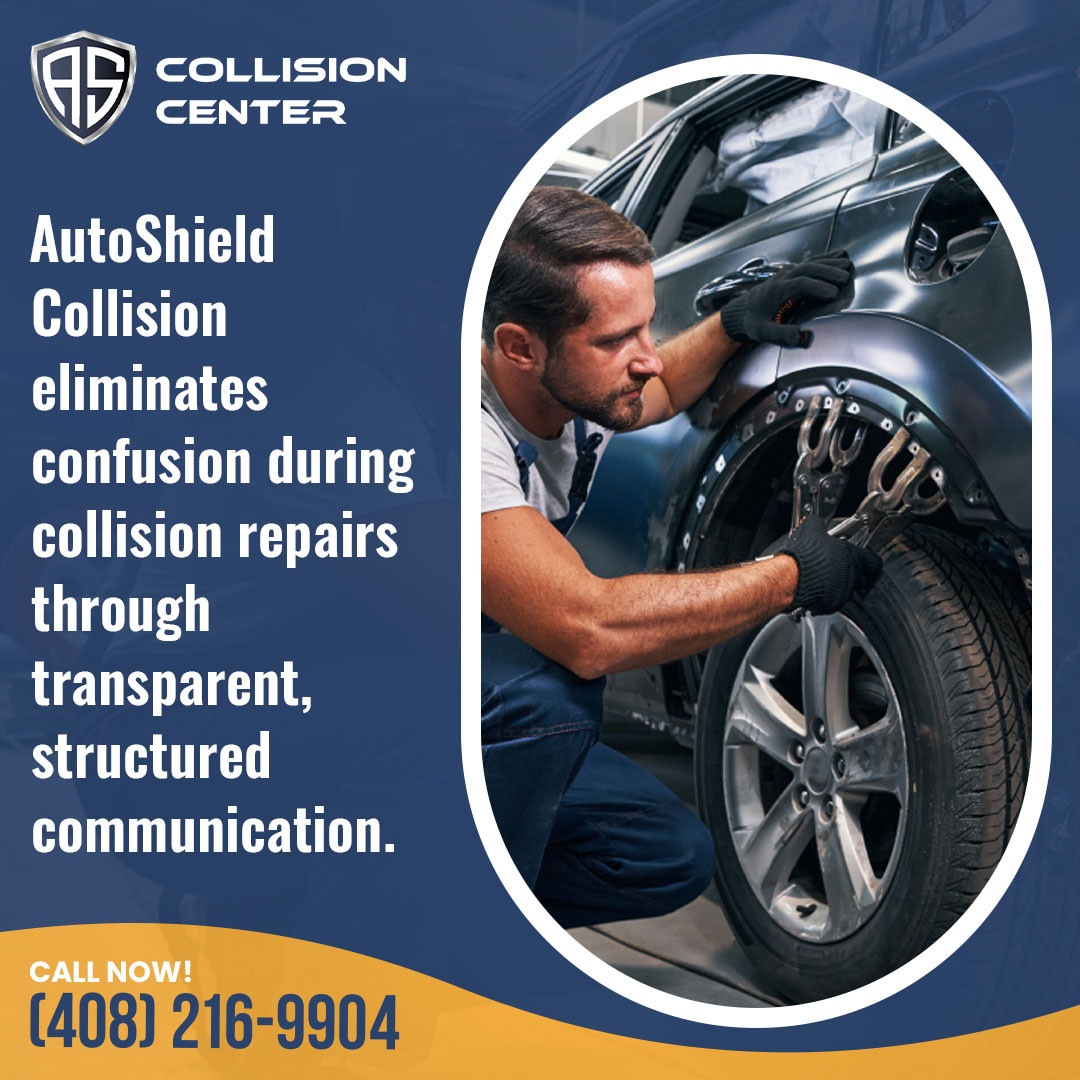
AutoShield Collision applies all of the above communication strategies to help drivers seeking collision repair in Santa Clara avoid uncertainty during the process. From the moment a vehicle arrives, service advisors document all collision details, clarify insurance steps, and confirm how and when customers prefer to be contacted.
The shop provides updates matched to each phase of the repair, including disassembly, parts arrival, framework, paint, and inspection. When supplemental damage is discovered, AutoShield Collision provides updated estimates in writing, with photos and explanations included. Insurance coordination is handled directly with the adjuster to reduce customer stress and keep repairs moving forward.

Clear Contact From Start to Finish at AutoShield Collision
AutoShield Collision is committed to a transparent, structured repair process that helps customers stay informed and confident from drop-off through pickup. Drivers across Santa Clara and the Bay Area trust the shop’s communication-first model to reduce confusion and support better outcomes.
Call (408) 216-9904 or email service@autoshieldcollision.com to start your repair with AutoShield Collision and learn why they are the trusted choice for auto body collision repair near you.
Contact Information:
AutoShield Collision
860 Civic Center Dr
Santa Clara, CA 95050
United States
Moises Rodriguez
https://autoshieldcollision.com


Original Source: https://autoshieldcollision.com/blog/how-to-communicate-with-your-collision-repair-shop-in-santa-clara-for-better-results/